Research
Four active directions, from method development to prospective experimental validation.
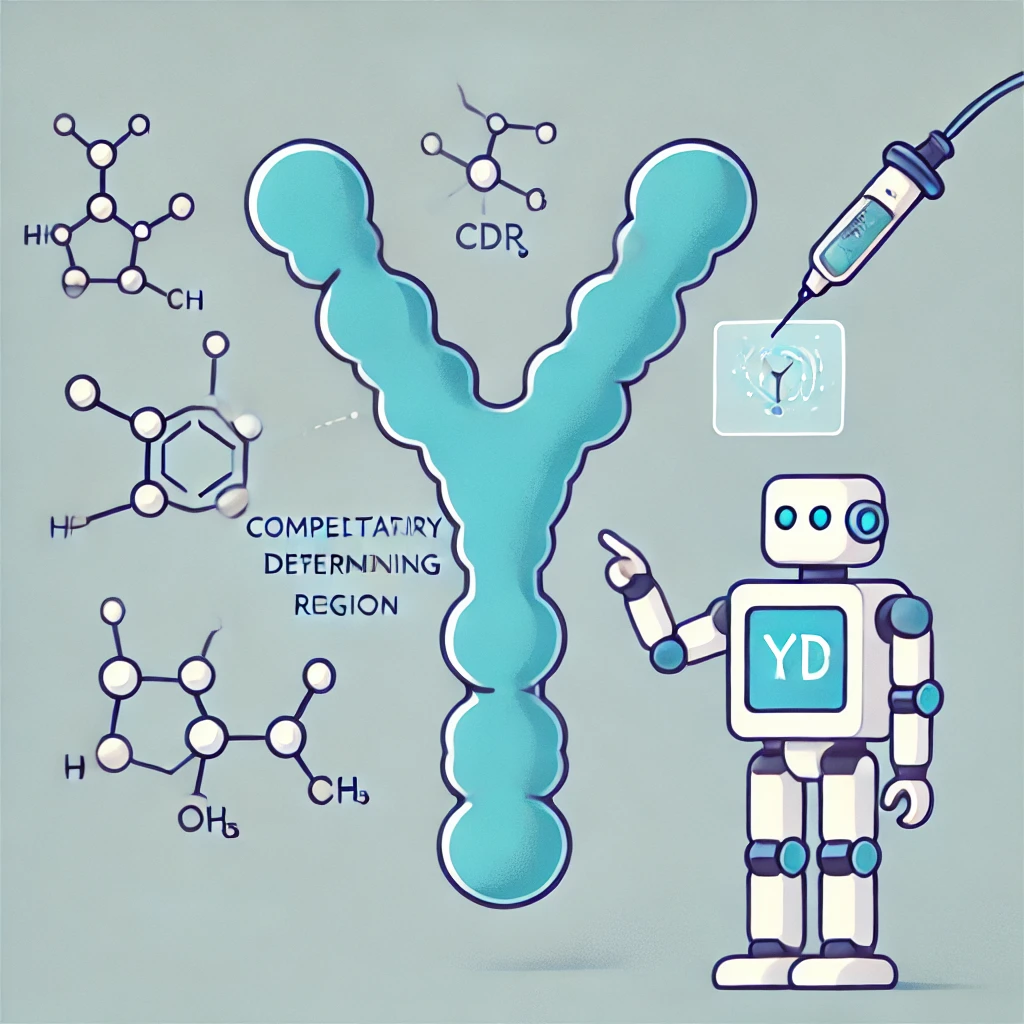
AI for antibody design
We design therapeutic antibodies with structure-aware machine learning and validate them prospectively in the lab.
LLM for scientific discovery
Large language models drive scientific discovery in data-scarce settings, from synthetic tabular data generation to drug synergy prediction.

Biomedical graph modeling
Graph neural networks represent complex biomedical graphs and derive patterns for better understanding of human biology.

Counterfactual inference
We investigate counterfactual inference to identify causality among complicated variables observed in real-world patient data.

Funding
More than $8M in extramural funding as principal investigator over the past five years.
Identify subgroups of patients showing similar progression patterns across multimodal data, including cognitive function, brain atrophy, and biomarkers, by harmonizing multiple completed clinical trial data.
Develop machine learning models to identify patient subgroups who respond differently to treatments, resulting in smaller, less expensive, and more targeted Alzheimer's disease clinical trials.
Establish a ten-institution research network and an AD/ADRD-focused collaborative data ecosystem incorporating common data elements and real-world data.
Define and validate clinically and biologically meaningful subgroups of bronchopulmonary dysplasia in preterm infants using large-scale neonatal datasets and transcriptomic data.
Develop an evaluation framework for emergency department decision-making and use it to assess AI models designed to support rapid and accurate ED decisions.
Develop a dynamic pattern mining model to identify trends and patterns of weight gain (temporal phenotyping) most likely to be diabetic.
Develop novel machine learning solutions to mitigate algorithmic unfairness by addressing data biases.